Beginner guide
Mars, explained: the start-here guide
The planet, the vocabulary, and how to follow the story without getting fooled.
Evidence as of September 2026
The planet in one minute
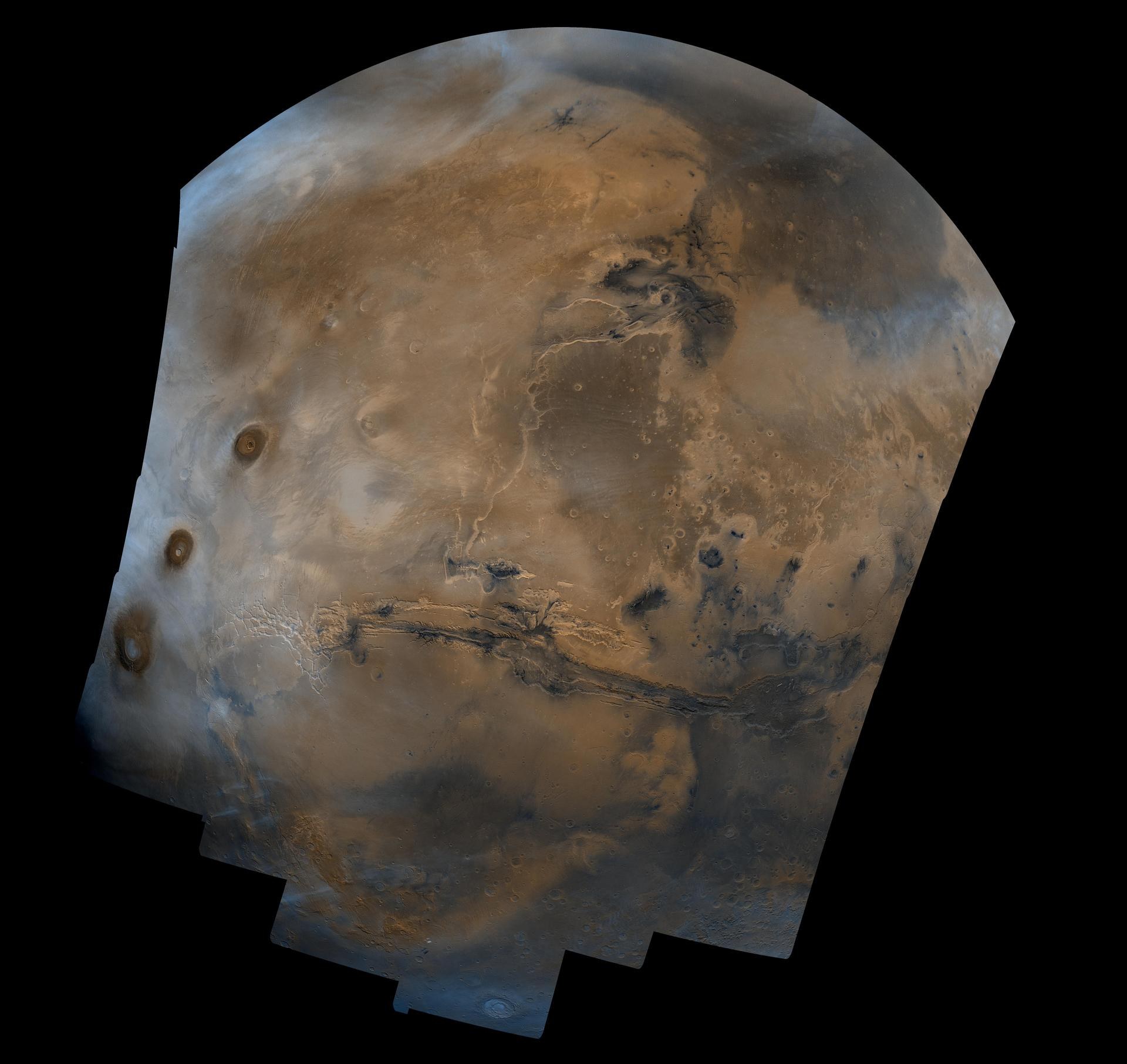
Mars is the fourth planet from the Sun: a 3,390 km-radius world sitting 228 million km out (1.5 AU), spinning once every 24.6 hours — a day, called a sol, only 37 minutes longer than ours. Its year is 669.6 sols (687 Earth days). The air is ~95% carbon dioxide at less than 1% of Earth's surface pressure; gravity is about 38% of Earth's. Average temperatures sit far below freezing, and the sky is butterscotch by day (more on that in Are these photos real?).
The landmarks worth knowing
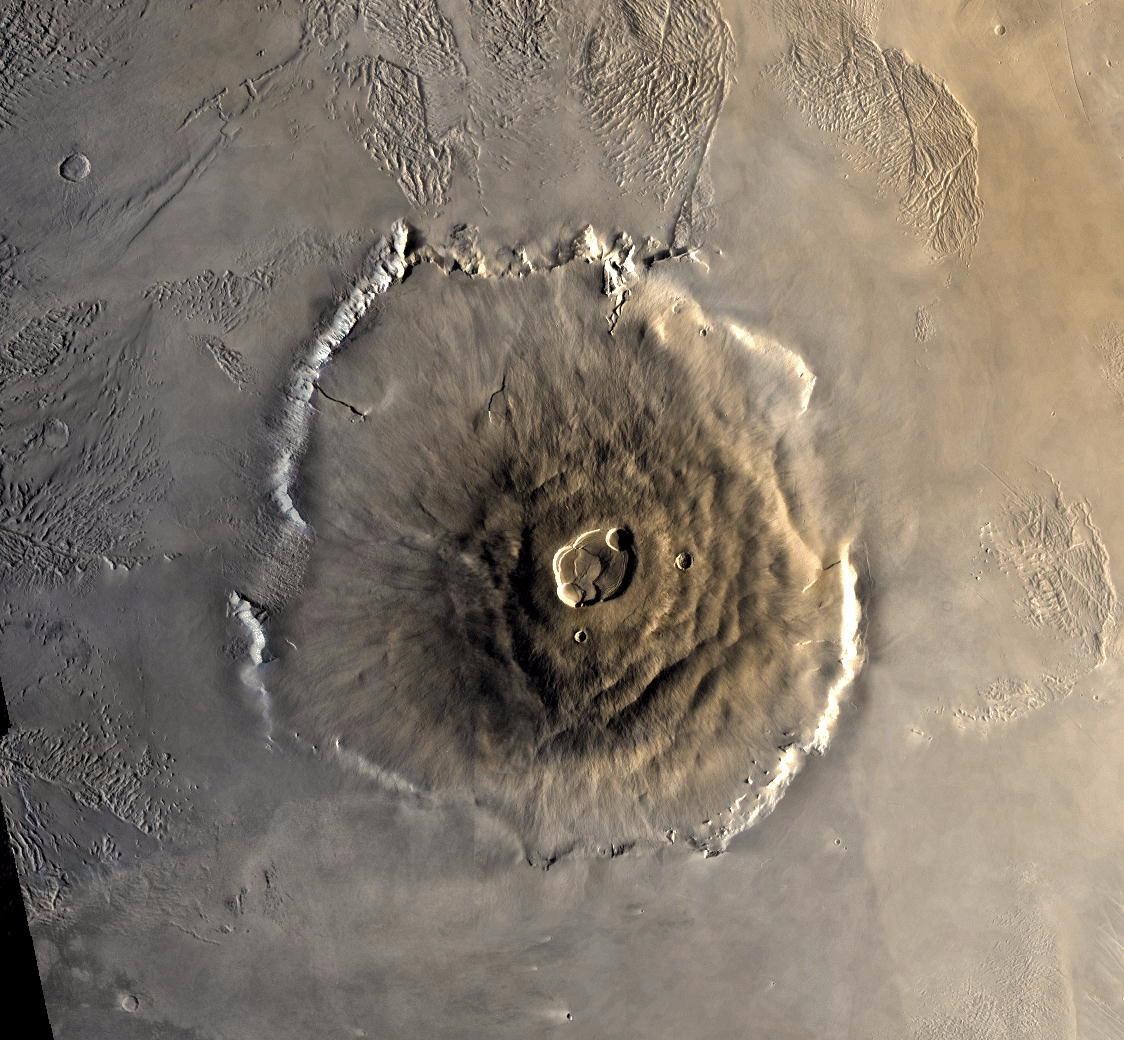
- Olympus Mons — a shield volcano ~26 km high and 600 km across. The tallest planetary mountain known.
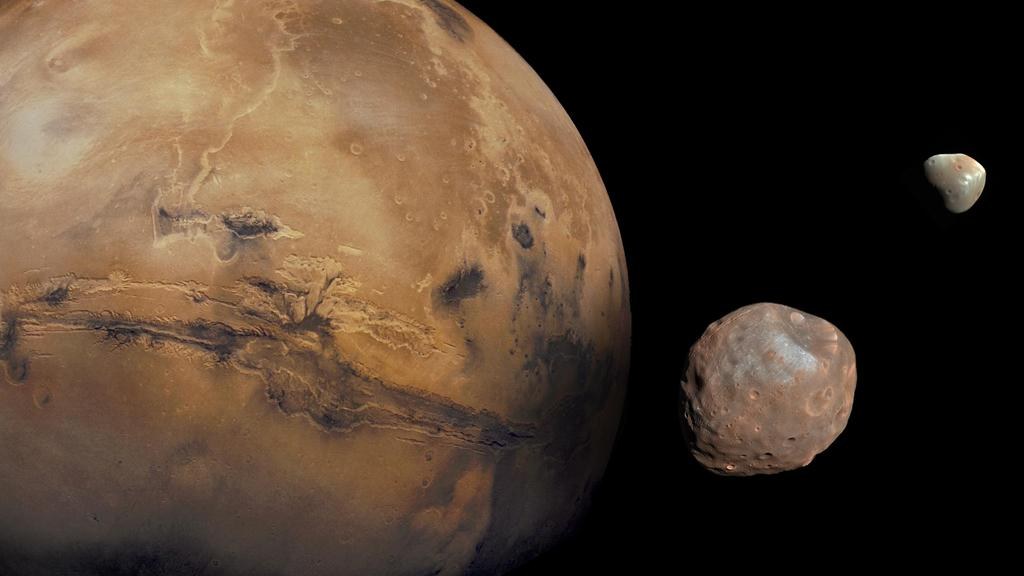
- Valles Marineris — a canyon system ~3,870 km long and up to 9.3 km deep. It would stretch across the continental United States.
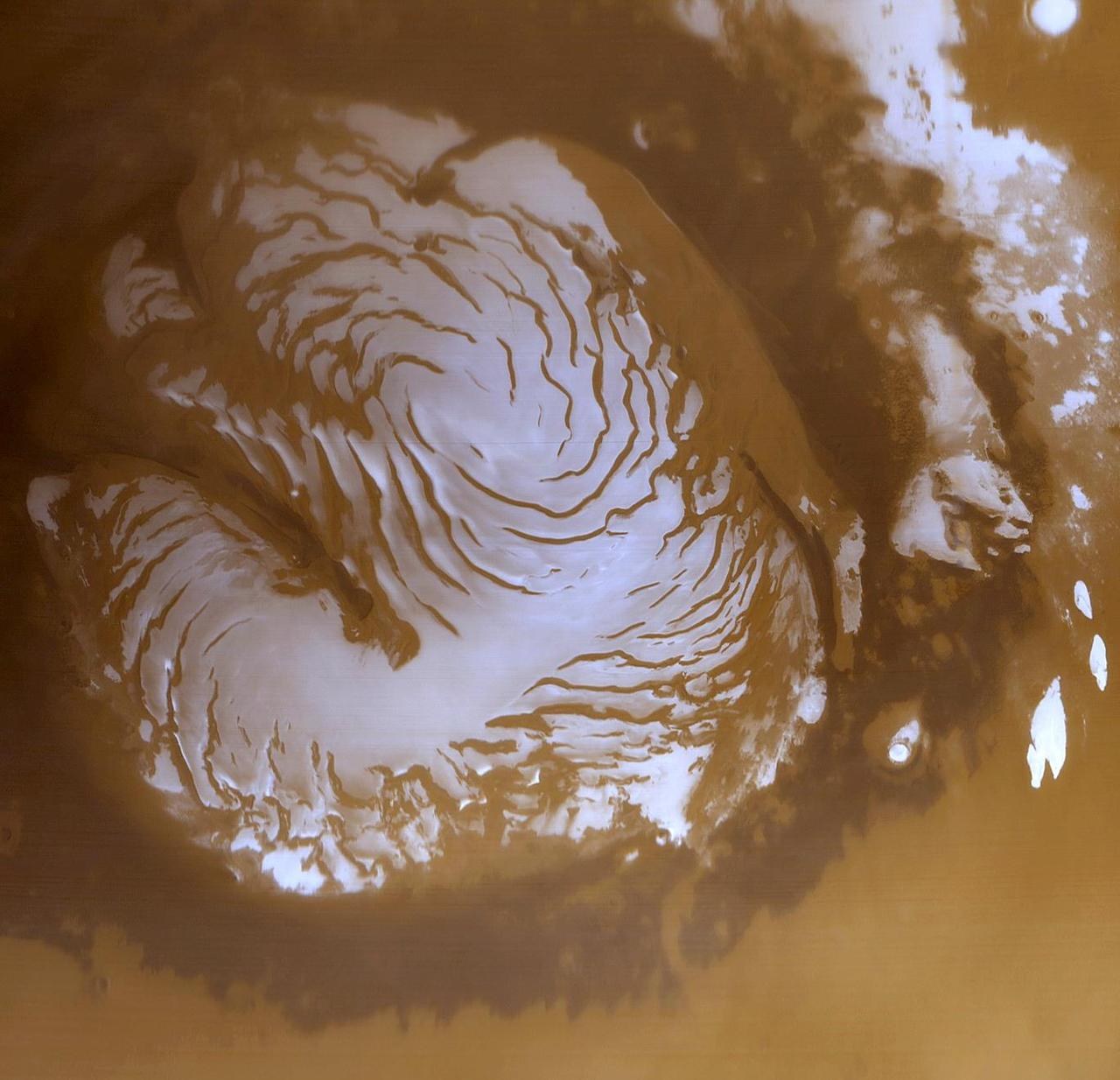
- The polar caps — seasonal carbon-dioxide ice that advances and retreats each Martian year, over residual water-ice caps underneath.
- Hellas Basin — a 2,300 km-wide impact scar, more than 9 km deep, in the southern hemisphere.
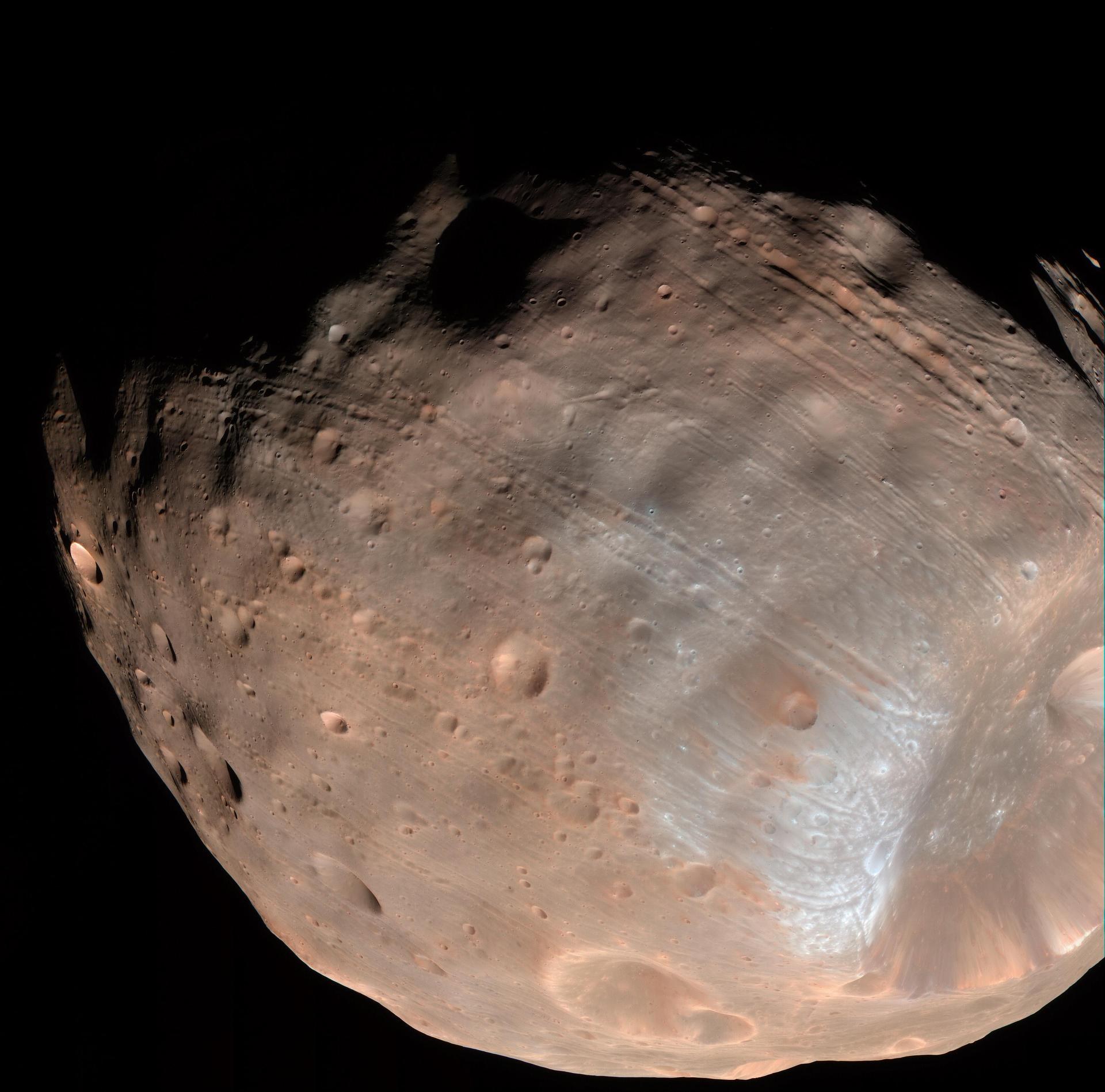
- Phobos and Deimos — two small, lumpy moons discovered in 1877 by Asaph Hall. Phobos is slowly spiraling inward and will one day break apart into a ring.
The vocabulary (because everyone assumes you know it)
- Sol
- A Martian day (24.6 h). Mission teams schedule rover work by sol number: Curiosity passed sol 5,000 on August 29, 2026.
- EDL
- Entry, descent, and landing — the "seven minutes of terror." A spacecraft must go from interplanetary speed to a soft touchdown with no real-time help from Earth, because radio signals take up to ~22 minutes each way.
- ISRU
- In-situ resource utilization: making fuel, water, or air out of local Martian materials instead of hauling them from Earth. A prerequisite for any serious human mission; never demonstrated at scale on Mars.
- RUD
- Rapid unscheduled disassembly — the industry's deadpan word for a rocket exploding. You'll see it a lot in Starship coverage.
- Transfer window
- The roughly 26-month alignment cycle when Earth and Mars line up for the cheapest trip between them. The late-2026 window is the current one.
- "Elon Time"
- Community slang, not a technical term: the observed pattern of Mars dates slipping (2024 → 2026 → 2028 → early 2030s). Useful as a filter, not a fact.
How to follow Mars without getting fooled
- Treat every human-Mars date as a claim, not a plan. Keep the hype audit open next to any announcement.
- Robots are the whole story right now. Everything humans have learned about Mars in the last decade came from machines. See the fleet.
- Photos are real, but processed. Rover images are genuine; colors are often calibrated or enhanced for science. The photo guide shows how to tell.
- "Potential biosignature" is not "life." The Cheyava Falls findings were validated by a peer-reviewed Nature paper (September 10, 2025) — and its own authors frame it as potential, not proof.
Limitations
Physical parameters are long-standing reference values from NASA/JPL (stable through Sep 2026; no post-2024 dated change found). Moon discovery day-of-month is disputed across sources (kept as year + discoverer only). "Elon Time" is community language, recorded as such.
Sources
- NASA Mars facts page — https://science.nasa.gov/mars/facts/
- JPL press materials; ESA feature pages; community jargon records.
- Full 172-URL provenance ledger: Sources & methodology.